
For those who do not live with a chronic illness, it is easy to be misinformed. When it comes to living with MS for the last ~ 12 years, I have heard a lot of wild assumptions from those who just simply do not know better. Let’s take a dive into the 5 most common myths and misconceptions I have heard about Multiple Sclerosis. If you’d prefer to listen to me chat about this, check out the video version here!
“You are going to die”
MS is a Chronic condition, not a Terminal one. Upon diagnosis, there is no reason to believe that a patient has a higher risk of fatality, though it is not unheard of that people unfortunately pass away due to complications of the illness. Potentially fatal complications can include, but are not limited to (PubMed) –
- Respiratory illnesses
- Increased risk of infection
- Sepsis
- Complications due to advanced disability
An MS diagnosis (or most other chronic illnesses for that matter) is not an automatic death sentence. Having personally been told by a previous provider that my illness was progressing at such a rapid rate that it would kill me in about a 10 year timeframe, this is by far the most irritating misconception.
“You look fine, therefore you feel fine”
MS, like many other chronic illnesses, happens to be an invisible illness for many who live with it. While there are many who live with visible symptoms (wheelchairs, mobility aids, back braces, etc.) it can be challenging to explain that we may not always feel as great as we appear on the surface. In my experience, folks like to assume you’re 100% okay if you still show up to the places you’re expected to, and Heaven forbid if you’re smiling! The human psyche can only process a very small amount of information at a given time due to the beautiful gift of perception; when you introduce someone who has chronic pain or symptoms that do not appear to the naked eye, it can be chaotic.
As someone who proudly wears a consistent sunny disposition, it can be jarring for others when I’m not showing up exactly as they expect. Whether it is because I am using mobility aids or just not smiling from ear to ear because I’m in a high level of pain, people have had some interesting reactions. Transparently, I have an easier time explaining things when my symptoms are visible in comparison to when they aren’t – when I look sick, people easily understand that I AM sick.
I am fortunate enough to feel pretty good most of the time and I will never be sorry about that! Things get complicated when I’m having issues with my cognitive processing or am in invisible pain – people get weird when someone asks for additional grace but appears fine on the surface.
Don’t judge a book by its cover; you never know the full extent of someone else’s story.
“If your symptoms are well managed, you don’t need Medication”
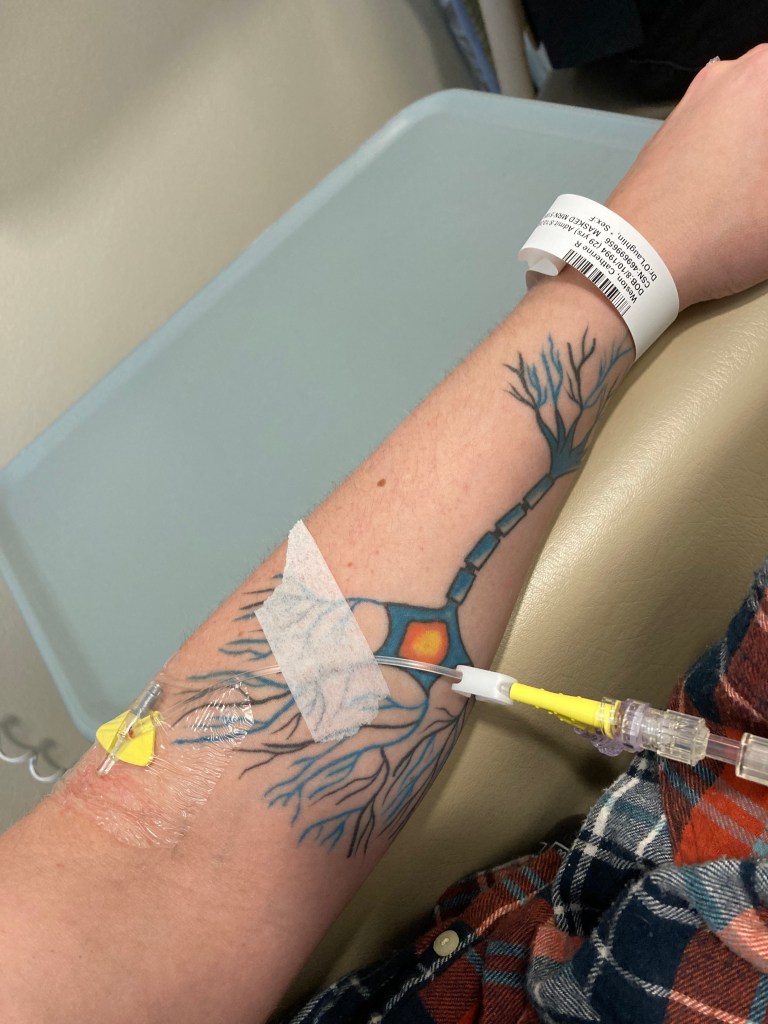
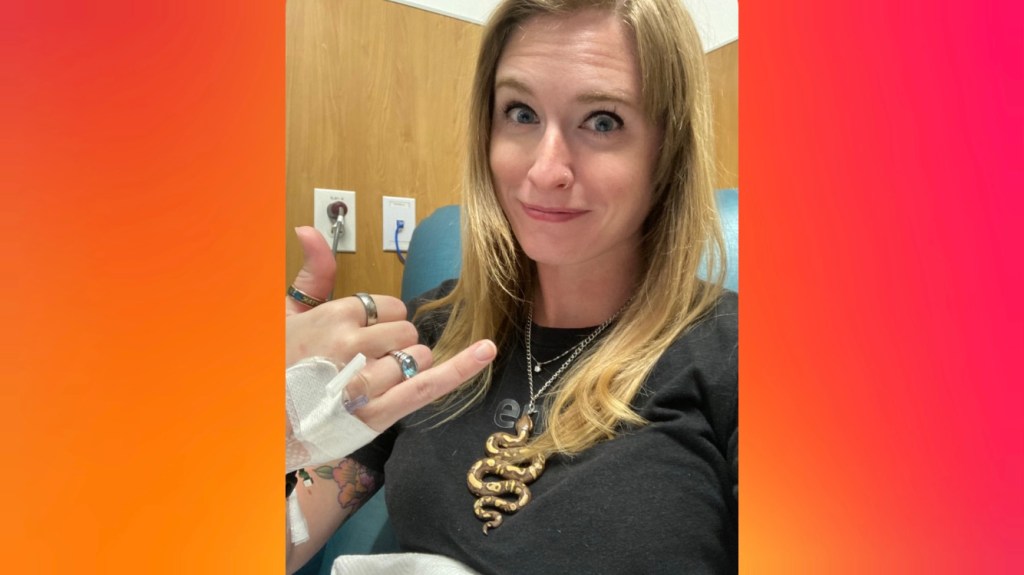
I have flip-flopped on this one personally for a very long time; not from the standpoint of agreeing with this sentiment, but in desperately trying to find a way to stop using DMTs completely. While I do strongly believe there is a world where this is possible with a very intentional lifestyle, I have not yet had success in this arena. Thankfully, I’m very pleased with how Ocrevus is treating me, so a little bit on the back burner these days!
The whole purpose of starting a DMT to help treat the symptoms of MS lies in flare and relapse prevention; the goal of these drugs is to help keeps symptoms well-managed and in check. One thing I’ve learned is that those living with chronic illnesses tend to be more PROactive vs. REactive. We want to nip the bud before it becomes a full-fledged crisis, and as we often like to say in my family – “if it ain’t broke, don’t fix it.”
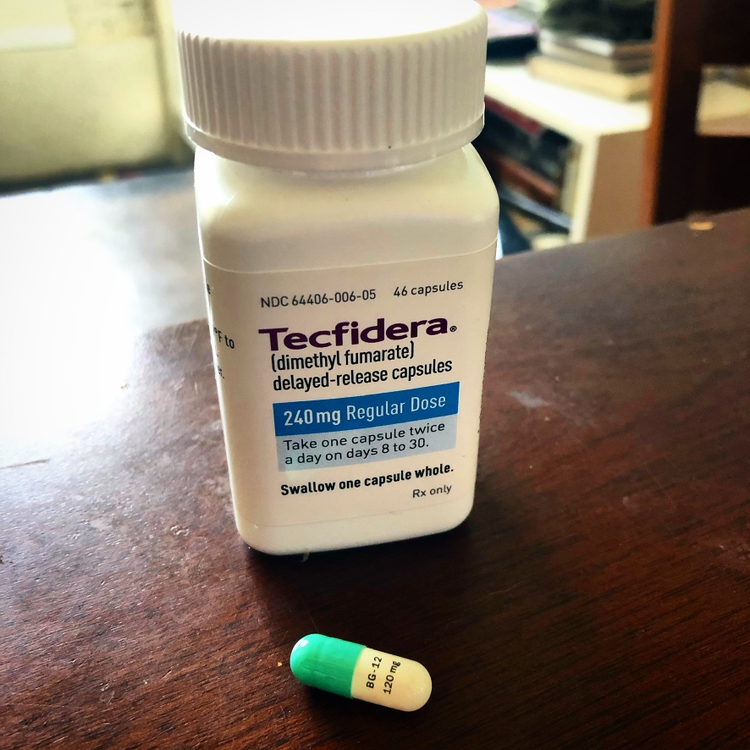
I was a lot more passionate about coming off the DMTs back when I was taking Copaxone because I didn’t want to inject 3x a week for the rest of my life, or when I was taking Tecfidera because the side effects were brutal. With a fairly non-invasive DMT that I only need to think about once every 6 months, I am happy to be thriving and will continue to take it as long as it continues to do what’s expected for me. Being medication attempt #4 for me, I could be singing a very different tune should things change.
MS is directly inherited in family genealogy
Today, there is no known cause for developing any type of MS. While there are a number of theories (geographic location, vitamin D deficiency, Epstein-Barr virus, etc.), one thing is accepted for certain – there is no known link to genetics or family history and the development of Multiple Sclerosis.
SAY IT AGAIN FOR THE PEOPLE IN THE BACK!
Now, with this, as someone living with the illness, I tend to be more risk averse in my decision making processes (e.g., my view on Chronic Illness and Fertility). When I was diagnosed, many of my family members started the self-blame-game.
- She has MS because I have Hashimotos
- She has MS because of the Mono
- She has MS because of that one time 15 years ago I did X, Y, Z…
With the world so desperate to nail down a true cause for the existence of Multiple Sclerosis, I found out that I’m surrounded by selfless heroes looking to take the blame for my unfortunate circumstances. Lucky for all of them, it’s still undetermined and I am zero percent convinced any of the reasons people have tried to give me are remotely accurate.
This one also goes in tandem with another misconception I’ve heard before, where many people have asked me where I “contracted” MS like it’s an STD. MS just happens and while all theories are welcome here, contracting it is not on the list of acceptable assumptions.
Every bad day = Flare or Relapse
It is easy to make this assumption in the beginning of a diagnosis journey, but thankfully there is no basis to this claim. Sometimes we just have bad days, and that goes in terms of heightened symptoms as well! For example, I may have shakier legs and be in extravagant pain on a really hot day, but it doesn’t automatically mean that I am flaring or having a relapse. You can stop panicking, friends and family, sometimes we have bad days but it doesn’t mean we’re on a downward spiral.
So, dear readers, at the end of the day the way I like to approach life is through assuming positive intent! We don’t know anyone else’s story as well as our own, so to assume positive intent is to give others the grace they may need in their day. Oftentimes, you’ll be pleasantly surprised and delighted by what you find in doing this in practice.
As always, thank you for remaining Chronically Joyful with me. ♡







Leave a Reply